Webinar insights: Master of Business Administration
Transcript
Master of Business Administration
Access now
Frequently asked questions
Students are supported by Online Learning Advisors, academics and the teaching team. The transcript also encourages students to speak with staff early if they need help with study, academic writing or managing challenges during their learning journey. Students are supported by Online Learning Advisors, academics and the teaching team. The transcript also encourages students to speak with staff early if they need help with study, academic writing or managing challenges during their learning journey.
The transcript explains that MBA entry requires a recognised postgraduate degree in any field with a minimum GPA of 4.5, plus at least three years of full-time work experience after completing that degree. If you do not have a university degree, you may be able to explore the Graduate Certificate in Business Administration pathway, which focuses on extended work experience. The transcript explains that MBA entry requires a recognised postgraduate degree in any field with a minimum GPA of 4.5, plus at least three years of full-time work experience after completing that degree. If you do not have a university degree, you may be able to explore the Graduate Certificate in Business Administration pathway, which focuses on extended work experience.
Yes. The Graduate Certificate in Business Administration is described as the first third of the MBA. It can be a good option if you want to return to study gradually, and then continue into the MBA if it feels like the right fit.
Introduction
Maggie Hill: It looks like we have got our attendees online now, so we may as well make a start. Thank you everyone for joining us this evening. My name is Maggie and I’ll be hosting today’s webinar which is focused on the QUT Online MBA. The session is designed to provide an overview of the course from both an academic and a practical perspective and help you decide if the course is the right fit for your goals. Before we begin, I’ll let you know that this is being recorded and it will be made available later if you’d like to take another look.
Acknowledgement of Country
Maggie Hill: I’d like to begin by acknowledging the traditional owners of the lands on which we meet today, as well as the Turrbal and Yugara people, the First Nations owners of the lands where QUT now stands. I pay my respects to elders past and present and acknowledge the important role Aboriginal and Torres Strait Islander people continue to play in the knowledge, leadership, and care of communities.
Webinar overview
Maggie Hill: As I mentioned earlier, this webinar is designed to help attendees decide whether the QUT Online MBA is the right fit for your goals. So, you’ll learn more about both the academic content and the learning outcomes of the course. We’re joined this evening by Associate Professor Udo Gottlieb who provides us with a snapshot of the course and the kinds of careers and roles it supports. We’ll then be joined by academic delivery lead Brock Cleminson who will talk about the practical experience of studying online and what you can expect from a day-to-day perspective. And there’ll also be an opportunity to finish tonight’s session with a Q&A so everyone can wrap up with all their questions answered. So, if you’ve got any questions, feel free to pop them in the chat now.
Introducing Associate Professor Udo Gottlieb
Maggie Hill: I’ll welcome our first speaker, Associate Professor Udo Gottlieb. Udo brings extensive experience across academia and industry, including international consulting work with global organisations. His work focuses on developing leaders who can navigate increasingly complex and rapidly evolving business environments. Associate Professor Gottlieb, thanks for being here.
What sets the QUT Online MBA apart
Maggie Hill: Let’s begin by talking about what we’re seeing in the business environment today. Business leaders are increasingly operating in environments defined by complexity and ambiguity. So, can you tell us what sets the QUT Online MBA apart from other options that are currently available?
Udo Gottlieb: Well, thanks for the introduction, Maggie. Much appreciated. Good evening, everyone. What sets it apart when you look at the suite of MBA programs that we offer here at QUT, the Executive MBA and the MBA that we teach online. It really comes down to what you are really after. What is your objective when it comes to advancing yourself?
The Executive MBA is a very structured approach over two years where you have to come to campus over a long weekend, Friday, Saturday, and Sunday, at least once a month. You do this over two years and you’re locked in. It’s a prescribed model. So, if you like this structure, if you like to know when you have to study, what you’re going to study in September next year, then this is your approach.
If you’re interested in flexibility, if you’re interested in studying whenever, wherever, if you have a work environment that demands a lot of travel from you, that demands long hours from you, that is an environment where the shifts are infrequent and irregular, then the MBA that we deliver in an online mode is the way to go because you are fully in control of when you study, how many units you study, at what time you study. You’re in control.
The lectures are live online, but they get recorded, so you can revisit them at a later stage. It’s really up to the individual’s personal professional circumstances but also their style of learning. Are you someone who needs this group pressure from your peers in a classroom or do you prefer studying by yourself? So I think these are the main differentiators when it comes to our MBA that we deliver online and our Executive MBA that we deliver on campus.
Graduate Certificate in Business Administration
Maggie Hill: Fantastic. Thank you. And so, the Graduate Certificate in Business Administration is also an option. Can you tell us a bit about this course and which students it appeals to?
Udo Gottlieb: The Graduate Certificate in Business Administration is the first third of this MBA. So, whether you study a Graduate Certificate in Business Administration or an MBA, everybody studies the same units there.
The Graduate Certificate in Business Administration is a great way to get back into studying. A lot of our students are mature-age students who haven’t been to university often in 10 years or more. You can start out by enrolling in a Graduate Certificate in Business Administration to see if it suits you, to see if the learning style suits you.
We all have busy family lives and busy work lives, and adding a degree to that can be challenging. So with that Graduate Certificate you start out by committing to only a third of this MBA. If you then find out that’s what you like doing, that this learning style suits you, you can then decide to move from a Graduate Certificate in Business Administration into the MBA.
So, the Graduate Certificate, the first third of the overall MBA, is an opportunity for people who are not 100% sure this is the right way for them to go. You can enrol in the Graduate Certificate, make sure you’re on the right track, and then join us for the remaining two thirds and complete your MBA with us.
Assessment formats
Maggie Hill: Fantastic. Thank you. It’s good to hear that option is available for people who might not be fully ready to commit to the MBA straight off the bat. So, for people who are deciding this evening whether or not it is the right fit, can you tell us about what type of assignments students can expect to be doing in both the course options?
Udo Gottlieb: Well, we are catering to all learning styles, to all learners. So that means there will be reports, essays, live presentations, viva, debates to ensure that whether you are someone who rather writes their assignment and goes over it numerous times and fine-tunes this before you submit it, or if you would rather do this in a more oral environment and present freely, we’ve made sure that we’ve got something for everyone’s learning style.
MBA alumni outcomes and networks
Maggie Hill: Great. And it would be excellent if you could also tell us about some of the alumni who’ve completed the QUT MBA. What are they up to now?
Udo Gottlieb: Well, some of them are back in the classroom. Some of them have come back, and it’s great for us to integrate our alumni in the classroom. They come back as industry partners and they present as guest lecturers. They also provide us with assignments or assignment topics so that students don’t work on fictitious assessment items.
They are literally all over the world with their jobs and help create a fantastic network of QUT MBAs, enabling this network to grow so that whether someone is looking for a job or is offering a job, there usually is an alumni out there somewhere who knows someone who’s heard of somebody who can help grow that network.
And when it comes to what sort of industries they are in, we’re covering pretty much all the major industries, whether that is mining, finance, tourism, education, domestically as well as internationally. So, I can’t really narrow it down much to be honest because it’s such a diverse group of alumni. And that is one of the main areas that we focus on when we choose our MBA students, making sure that we have cohorts that enable students to challenge each other, work with each other, learn from each other, and grow with each other.
Our MBA offers them a lot more than a transcript, a lot more than a certificate at the end. It gives them this group of people that they become acquainted with for the duration of their degree and then will most likely stay in contact with throughout a significant part of their career.
The value of the MBA experience
Maggie Hill: Fantastic. Thank you. And one final question for someone considering this, what’s the one key thing that you want them to understand about the value of doing the degree?
Udo Gottlieb: The one key thing probably is about what I just mentioned, that it is not about these individual lines on the transcript. It is about growing as an individual, making full use of the cohort you belong to when you go through your MBA experience. Because we don’t want students to only join us for a set period of time. Usually, we’re talking about one-and-a-half to two or three years. We want our students to stay with us. We invite our students to come back to QUT as alumni and get involved in our community whichever way they feel comfortable.
Maggie Hill: Thank you. I really appreciate those insights. We’ll bring you back in for the Q&A at the end. Thanks so much, Udo.
Udo Gottlieb: You’re welcome.
Introducing Brock Cleminson
Maggie Hill: I’d now like to welcome our second speaker, Brock Cleminson, academic delivery lead for the QUT Online MBA. Brock’s role is about working closely with students throughout their learning journey, and she brings insight into how the course supports professionals from a wide range of backgrounds as they develop their leadership capabilities. Welcome, Brock.
Brock Cleminson: Thanks for having me, Maggie.
Student support and academic delivery
Maggie Hill: So just to begin with, can you tell us a little bit about your role and how you interact with students on a day-to-day basis?
Brock Cleminson: Yeah, definitely. So, I’m really lucky. I get to work with a fantastic team of academics, Online Learning Advisors as well as the learning designers across the MBA. So, I get to see a lot of what goes into creating the student experience.
One of the things I enjoy the most is the variety of conversations I get to have. I get to meet prospective students right from admission and get to hear about their career goals, their aspirations, and what’s led them to consider the MBA.
And then I also get to work really closely with our teaching teams. I also step into a teaching and facilitation role myself across a couple of units. So that gives me the opportunity to interact directly with students throughout their studies.
And because of that, I get a really interesting perspective on the MBA and the different experiences that students bring to the classroom. And I think what I enjoy the most about my role is being able to hear those stories and the different perspectives that students bring from their workplaces, and just seeing the different ways that they apply their learning.
Student backgrounds and peer learning
Maggie Hill: Great. So just to expand on that, can you tell us a bit about the different professional backgrounds that you see in students and how this contributes to the learning experience for everyone?
Brock Cleminson: Yeah, great question. I think one of the strengths of the MBA is the diversity in our cohort. We get students from a range of industries. More recently, healthcare, engineering, a couple from government, sales, operations, small businesses as well, so owner-operated businesses. That is just to name a few. Some students are already leading teams, others are preparing for their first leadership role. We also see students who bring a wealth of technical or operational expertise in their field, and what they’re looking for is something that complements their experience; that’s the path that they take in pursuing formal business education.
Many students come to the MBA, as Udo mentioned, after a significant break from study and are looking to broaden their perspective, build their confidence, and a lot are looking to prepare for a more strategic role or a strategic opportunity within their organisation. I think what makes the learning experience particularly valuable is that diversity of experience and perspective that students bring to discussions, activities, and assignments. Again, something Udo mentioned before, is that students really aren’t just learning from academics. I think what’s really special is that they’re very much learning from each other, and we’re learning from them as well, to be fair. It really is those peer-to-peer discussions and insights that students often tell us become one of the most valuable parts of the MBA experience.
Collaboration in the online learning environment
Maggie Hill: Great. It’s really good to hear about all the interaction and collaboration that happens among students. Can you tell us what this looks like in an online learning environment? How do students connect with each other and what does that collaboration look like?
Brock Cleminson: I think people are often surprised by how connected students can become in an online environment. Students generally connect through discussion activities, group assessments, live webinars, and informal networking opportunities throughout the program as well.
One of the things I enjoy seeing is how quickly students start sharing experiences from their own workplaces and learning from each other very much from the onset in their first unit. Because, as I mentioned, our students come from such diverse industries and backgrounds, those conversations become a really valuable part of the learning experience and create that community of learning.
It’s not uncommon to see students continuing conversations outside of class. I have students set up WhatsApp groups, and they’re really seeking to support one another through their assessments, sharing professional insights and building networks. It very much extends beyond just a single subject. I think it’s something students invest in that really carries them through the duration of the time that they’re with us.
In many cases, students find themselves part of a community of professionals that are ultimately facing similar challenges, even if they’re working in completely different industries. So, while the learning is online, I have to say from experience and even the relationships I have with my students and my remote virtual teaching team that the relationships and the connections that you develop are still very much real.
Balancing online study with work and life
Maggie Hill: That’s fantastic to hear because I think sometimes people think if it is online that genuine connection doesn’t happen. I can imagine that a lot of the students would be already in quite demanding roles. Can you tell us a bit about how you see students balancing this while they’re doing the online MBA?
Brock Cleminson: Yeah, of course. Again, something Udo also referenced, is that most of our students are already busy professionals, and as well as balancing study, they have their own careers and family commitments. Some are often already in significant leadership roles as well and have a lot of responsibility within their organisation. I’ve completed an MBA myself while working full time, so I can completely understand and empathise with both the opportunities and the challenges that come with fitting study into an already busy life.
What I consistently see in students that succeed is they’re very realistic about their time. They plan ahead and they establish study habits that work for them. One of the major advantages of the online format is the flexibility it provides. Students can engage with learning materials when it suits them, but they still have the opportunity to connect synchronously with the academics, their teaching team, and their peers.
It certainly is still challenging at times, but many students tell us that the flexibility of the online environment is what makes pursuing an MBA more possible when it might not otherwise be. There’s never a perfect time to start an MBA. Having been there myself, life is always really busy. The students who do well are the ones that take that first step and find a rhythm that works for them.
One other thing that I think is also really important for prospective students to know is that they’re not doing this alone. Our academics and our online learning team genuinely want our students to succeed, and we’re often some of their biggest advocates throughout the entire program. We get that students are balancing competing priorities. We understand that things happen and we work really closely with them as a teaching team to help them navigate those situations and stay on track wherever possible.
Speaking from my own experience, there really is a true partnership between students and the teaching team. I think that’s another one of those things that makes the learning experience so positive.
Applying MBA learning in the workplace
Maggie Hill: Amazing. Thank you. One last question before we go to the Q&A and bring Udo back in. I think something that’s important for students wanting to start the MBA is they want to make sure that they’re going to get value from this. Can you talk about how you’ve seen students start to apply the concepts that they’re learning directly into their workplace?
Brock Cleminson: Absolutely. I think one of the things that I found really unique about MBA students is how quickly they start applying what they’re learning. Most students are already experienced professionals. As we’ve said, they’re often bringing their own real workplace challenges into discussions, assessments and classroom conversations, and we very intentionally create the space for those conversations too.
The learning isn’t something that they save for later. It’s very much something that they’re often applying in real time, in between classes and in between assignments. They’re testing their thinking. We regularly hear students talk about approaching stakeholder conversations differently, approaching a change initiative differently, improving team dynamics, tackling organisational challenges, and using concepts that they’ve explored within the class.
Again, we’re very intentional about creating and designing opportunities to facilitate that experimentation and think a little differently when they go back to the workplace. It’s not just about gaining new knowledge. It’s often about seeing very familiar challenges, but perhaps through a different lens.
From a leadership perspective, I think one of the biggest shifts that I observe in students is they start to think really differently about the role they play within organisations. It’s moving beyond being the person who provides all the answers to being a person that can create the conditions for other people to succeed. That’s really exciting for me, to start seeing students think differently about how they contribute and how they step back and think more strategically about their organisation, and not just what they do operationally day to day.
Q&A: Entry requirements and study background
Maggie Hill: Thanks so much for joining us, Brock, and sharing your experience. Please don’t go anywhere. We’re going to go into the Q&A now and I’m sure we’ll have questions for both Udo and Brock. I’m just having a look and please, if you’ve got any questions, feel free to pop them into the Q&A.
The first question is, do you need to have a business background if you want to study the MBA or the Graduate Certificate?
Udo, do you want to start with a response to that one?
Udo Gottlieb: Yeah, sure. Thank you. In order to join us with our MBA, you need to have a recognised postgraduate degree in any field with a minimum GPA of 4.5. GPA is grade point average. And you need to have a minimum of three years full-time work experience post your degree. Then you can join the MBA. If you haven’t got that university degree, there is the Graduate Certificate in Business Administration available, so you can contact us and see whether you fulfil the requirements for joining the Graduate Certificate. The focus there then is on extended work experience.
Maggie Hill: Great. And for students who may not have completed an undergraduate degree and are looking at doing the Graduate Certificate, is it possible for them to be successful if they haven’t had experience studying at the university level?
Udo Gottlieb: Well, that’s why the Graduate Certificate is only a third of that MBA, so they can try themselves out. Our units are purposely designed to increase in terms of level. We’ve got introductory units, then we have intermediate units, and then we’ve got mastery-level units. This Graduate Certificate is very much on an introductory level, designed for people who after 10 years and more desire to go back to university or indeed have never been to university before.
Q&A: Studying online for the first time
Maggie Hill: Fantastic. All right, next question. This one might be a good one for Brock. If you haven’t studied online before, is it achievable to do an MBA online?
Brock Cleminson: Yes. Again, having done it myself and starting to see students really thrive and succeed, I think it goes back to perhaps the first question that we asked Udo around deciding what the right course is for you and understanding how you best learn. I do think where I’ve seen success in the online MBA is very much that self-paced component coupled with synchronous opportunities to connect with students and academics. In terms of the system, it’s relatively intuitive, but again, I think it comes down to the support that you receive from your Online Learning Advisors, your academics, and your teaching team. I certainly think, just building on the last question, if you’re unsure if you have the right credentials or if you have questions about the specifics of the online MBA, reach out to the course advisory team at QUT and talk through your experience, both academically and your industry experience, and have a conversation as to whether it’s the right fit for you.
Udo Gottlieb: Great. And to add to that, I think if you struggle for whatever reason, speak to us. Speak to us early and we’re there to help make sure that your journey is as smooth as possible. It might mean that you need to pause for a little while or there’s a need to provide you with additional resources to help you come up to speed with academic writing. Whatever it is, my recommendation always is to speak to our fantastic staff as early as possible because we’ve usually seen it all and we know how to help out in difficult situations, whatever they might be.
Q&A: Choosing an MBA specialisation
Maggie Hill: That’s a great point. That’s very reassuring. I can imagine you absolutely have seen it all. Right, this one is about specialisation. At what stage in your MBA do you have to decide on your specialisation? Udo, do you want to start with that one?
Udo Gottlieb: Yeah, sure. We have nine prescribed units that that every MBA student takes. Then we have three units for the individual specialisation, for the individual streams. We’re talking about streams in regards to project management. We’re talking about engineering, science, health, and business specialisation. We offer this plethora of opportunities and you don’t have to choose right at the very beginning. You can work yourself through this Graduate Certificate, through the first third and more. Then, when you get to having to choose the specialisation at the tail end of your degree, you can make that decision. There’s plenty of time to speak to peers and speak to us, the staff, if you’ve got any questions about the various streams, to get our input before you have to make that final decision.
Maggie Hill: And do you find that students are pretty clear on what they want to do, or is it often the case that having those conversations helps them to get clarity?
Udo Gottlieb: I think we experience two things. Often students come to us and they say they know exactly what they want to do, and then they hear about the options available and the reasons why other students choose streams that they aren’t interested in. Then, suddenly, they do a bit more digging around and a bit more research, and then they usually solidify their decision one way or the other.
The other one is that students early on come to us and say, I wanted to do an MBA or an EMBA, I just don’t quite know yet which way I want to go. That’s exactly why we designed the courses the way we have, so that it gives you the opportunity to explore, to find yourself, to talk to others, to do your research, and then with plenty of time, you can make the right decision to pick one of the streams available.
Next steps for prospective students
Maggie Hill: Fantastic. Thank you. Last call, if anyone else has a final burning question, pop it in the chat. Yes, I think we’ve finished our questions for this evening. A big thank you to both of our panellists this evening, Associate Professor Udo Gottlieb and Brock Cleminson. Thank you to everyone who came along. If you’re considering the MBA, the next step is to explore the course page and download the brochure. You can find that at online.qut.edu.au and then head to the courses section. You’ll be able to download a detailed course brochure there. You can also contact the team by calling 1300 104 196 between 9:00 a.m. and 5:00 p.m. Monday to Friday.
Q&A: Exams and coursework
Udo Gottlieb: Excuse me, Maggie. Wesley put a question into the chat box. How is the exam? Brock, maybe I refer to you when it comes to exams and how the exam is administered.
Brock Cleminson: For the most part, it’s not exam. It would be coursework, so it would be assignments that you would submit, especially for the Graduate Certificate and the core units. Generally speaking, you would average two per unit, and they’re a mixture of written assessments, group work, and live assessments. We just facilitated in Udo’s unit a live debate within a team, which was definitely an incredible assessment experience. So, it’s a mix of different assessments for the most part, and they’re all submitted online through the learning platform, through Canvas. As I said, it’s a combination of different assessments, both written, verbal and team. It’s a bit of a mix.
Maggie Hill: Fantastic. Thank you. Sorry, Wesley, that I missed that one. Thank you so much to both of our speakers and thanks everyone for joining. We’ll also send through a follow-up email that has a recording and key links so that you can watch it again if you’d like. And also head to the website and download the course brochure. Thanks very much everyone.
Q&A: Capstone assessment
Udo Gottlieb: Maggie, one second there. Wesley asked another question. How about the capstone unit? Wesley, are you referring to the assessment when it comes to the capstone unit or anything else in regards to the capstone unit?
Maggie Hill: If you just pop your clarifying info into the chat, Wesley, we’ll be able to answer that.
Wesley: Yes, the assessment.
Udo Gottlieb: Okay. I can speak to that one. The capstone unit consists of two assessment items. The first one is a presentation where you present a progress report. You need to choose a real-world issue and then design and deliver a presentation around it, when it comes to the plan that you’ve developed and how to tackle that particular real-world issue using all the knowledge, the theories, and the frameworks that you were exposed to and learned throughout your MBA experience.
The final assessment item is a report. What you’ve presented as assignment one is that initial presentation where you then get feedback from the academic and where you also get feedback from the industry partner you’re working with. That capstone unit brings everything together academically, but because you will identify this real-world issue, you will have an industry sponsor. That could be your supervisor right now, could be your boss right now, could be someone that we may provide if you don’t have a real-world issue that you can identify yourself.
Then you submit that report to us. The industry partner will review it as well, and you will then be marked based on your recommendations on how to tackle that real-world issue using all the tools and theories that you were exposed to throughout the MBA. I hope that answers that question. Otherwise, Wesley, just put another one into the chat.
Maggie Hill: All right, cool. Thanks so much. I’ll just leave it one more moment unless any final questions pop up.
Udo Gottlieb: Wesley, if you’re interested, that presentation is a five-minute presentation and then a two-minute Q&A session. The report is a 2,000-word report that we ask students to submit. The challenge is to put everything you want to say on paper in 2,000 words.
Closing remarks
Maggie Hill: Fantastic. Thanks so much, Udo. Thanks, Brock. I really appreciate everyone coming along this evening. That brings our webinar to an end. As I mentioned earlier, we’ll send through an email to attendees with a link as well as more information if you are interested in the course. Thanks everyone.
This transcript is based on a recorded webinar and has been lightly edited for readability, clarity and conciseness. We’ve removed filler words, false starts, and repeated phrases (such as “um” and “ah”) without changing the meaning. All information remains accurate to the recording.
Webinar insights
As emergencies and disasters become more frequent, we need leaders ready to build resilience and keep communities safe
Creating the workforce our communities need to respond to this growing challenge.

Want to take your emergency and disaster management skills to the next level? Career pathways you may not have considered
A practical guide to roles, skills and how postgraduate study can help you lead in complex events.

From technical expert to strategic leader: how does the QUT Online MBA accelerate your next professional step in rapidly evolving business world?
As the world of business becomes more complex and ambiguous, many leaders want to develop the skills to effectively manage these challenges. The online MBA at QUT Online offers a flexible study option delivered by a globally recognised business school.

The need for skilled professionals who can respond to domestic violence
Domestic violence is a growing issue across Australia, creating urgent demand for professionals with the skills to respond safely and effectively. This blog explores why specialist training matters and how the QUT Online Graduate Certificate in Domestic Violence Responses prepares you for real-world situations. Learn how you can build practical, evidence-based skills to support victims and make a meaningful impact.
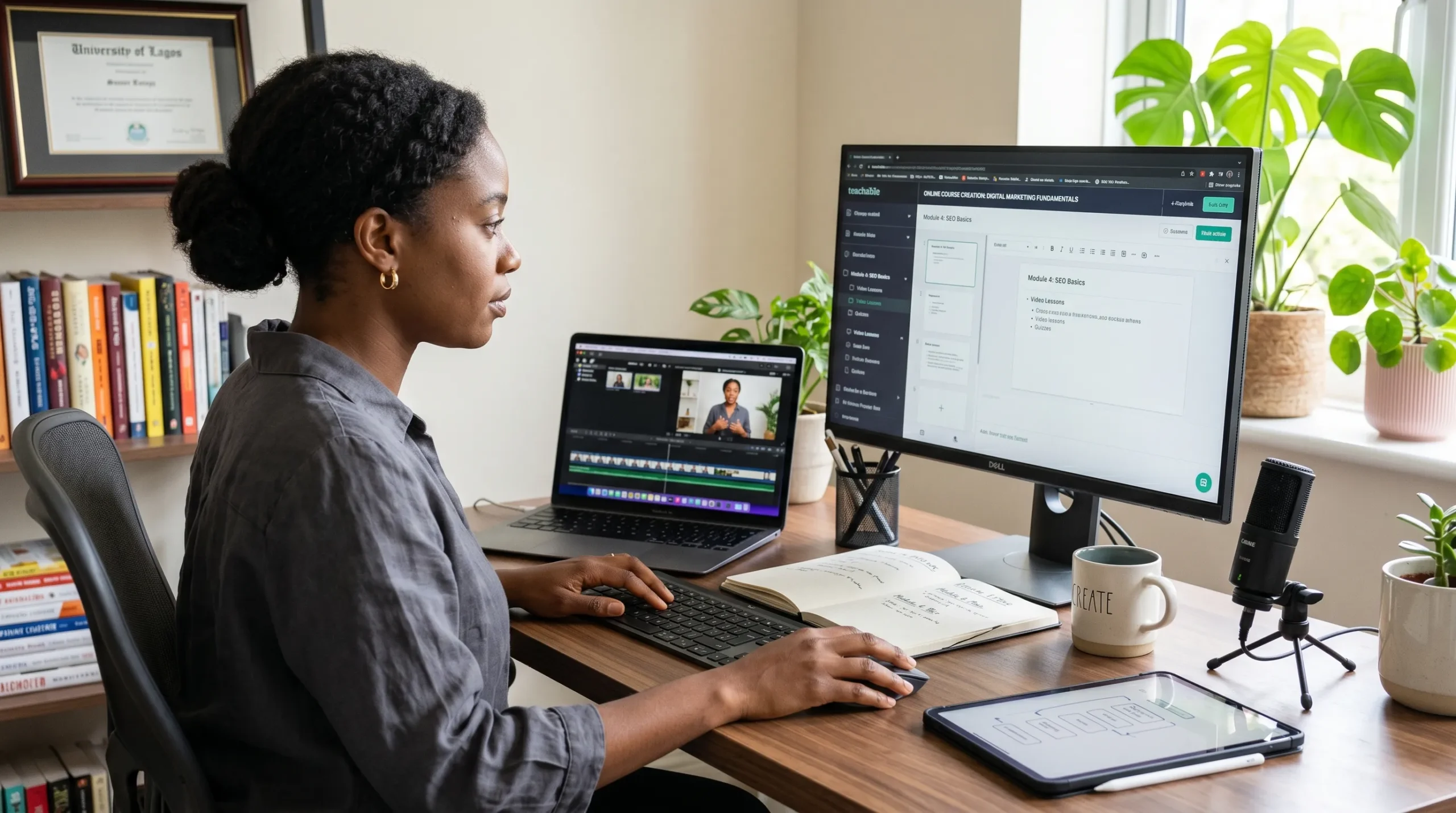
Is learning design a viable career path for teachers and educators?
As online learning expands, learning design has emerged as a growing career path for educators seeking a change. Discover how you can transition into a future-focused career shaping effective digital learning experiences.

Stepping into the growing career path of investigations and intelligence
It’s a career pathway that opens doors in many private companies and public sector organisations, but what does it take to get your foot in the door?

Thinking about a future in AI? Career pathways you may not have considered
A practical guide to roles and skills in demand across the IT landscape and how postgraduate study can help you lead in this rapidly evolving landscape.