
For many experienced teachers, the idea of becoming a principal starts with a simple question:
How can I make a bigger difference in education?
Teaching offers the opportunity to positively influence students’ lives every day. Principalship broadens that impact across an entire school community. It shifts your focus from leading learning in one classroom to shaping the culture and direction of a whole school.
If you’re wondering how to become a principal in Australia, the journey usually involves developing teaching expertise, taking on leadership responsibilities and building experience in senior school leadership roles. While there is no prescribed pathway, most principals progress through a range of educational leadership opportunities before stepping into a principal position. Is it the right pathway for you?
What does a school principal do in Australia?
Principalship usually involves years of teaching experience, leadership opportunities and continuous professional development. It’s not simply the next rung on the career ladder. It’s a move into a role that influences students, teachers, families, and communities on a much larger scale.
Most teachers are familiar with some aspects of a principal’s role. They see principals leading assemblies, meeting with staff, speaking with families, and overseeing school initiatives.
But principalship goes deeper than school administration.
School principals are responsible for driving improvements in student learning, staff capability and overall school performance. They lead teaching and learning strategies, support professional development, manage budgets and resources, and work with parents and the community to achieve school-wide goals. Effective principals combine educational leadership with operational oversight to create positive outcomes for students and staff.
Principals create conditions that allow effective teaching and learning to flourish. They help set a school’s vision, support staff development, improve student wellbeing, manage resources, and build strong relationships across the school community.
The Australian Professional Standard for Principals describes principalship as an integrated leadership role that combines professional knowledge, educational leadership capability, and strategic decision-making. Rather than focusing solely on operations, principals drive teaching, learning, and school improvement. While teachers directly influence the students in front of them, principals support the success of entire school communities.
Why teachers choose principalship
One of the biggest transitions on the journey to principalship is moving from an expert practitioner to an educational leader. As a teacher, your daily focus is often on planning lessons, setting assessment tasks, and meaningfully engaging with your students. You can usually see the impact of your work through student growth and achievement.
As a principal, your focus broadens and becomes more strategic. This often involves aspects such as:
- coaching and developing teachers
- leading curriculum improvement
- guiding school-wide initiatives
- managing change
- building consensus across diverse stakeholders
- making decisions that balance competing priorities.
For many educators, this shift can be both challenging and rewarding. It often requires a broader perspective on leadership and student success.
What is the pathway from teacher to educational leadership?
There is no single pathway to becoming a principal in Australia. Career journeys can vary between states, school sectors, and individual schools. Your pathway will depend on your experience and the leadership opportunities you’ve taken on throughout your career.
However, most aspiring principals build leadership experience gradually through a combination of teaching, school leadership opportunities, and professional learning.
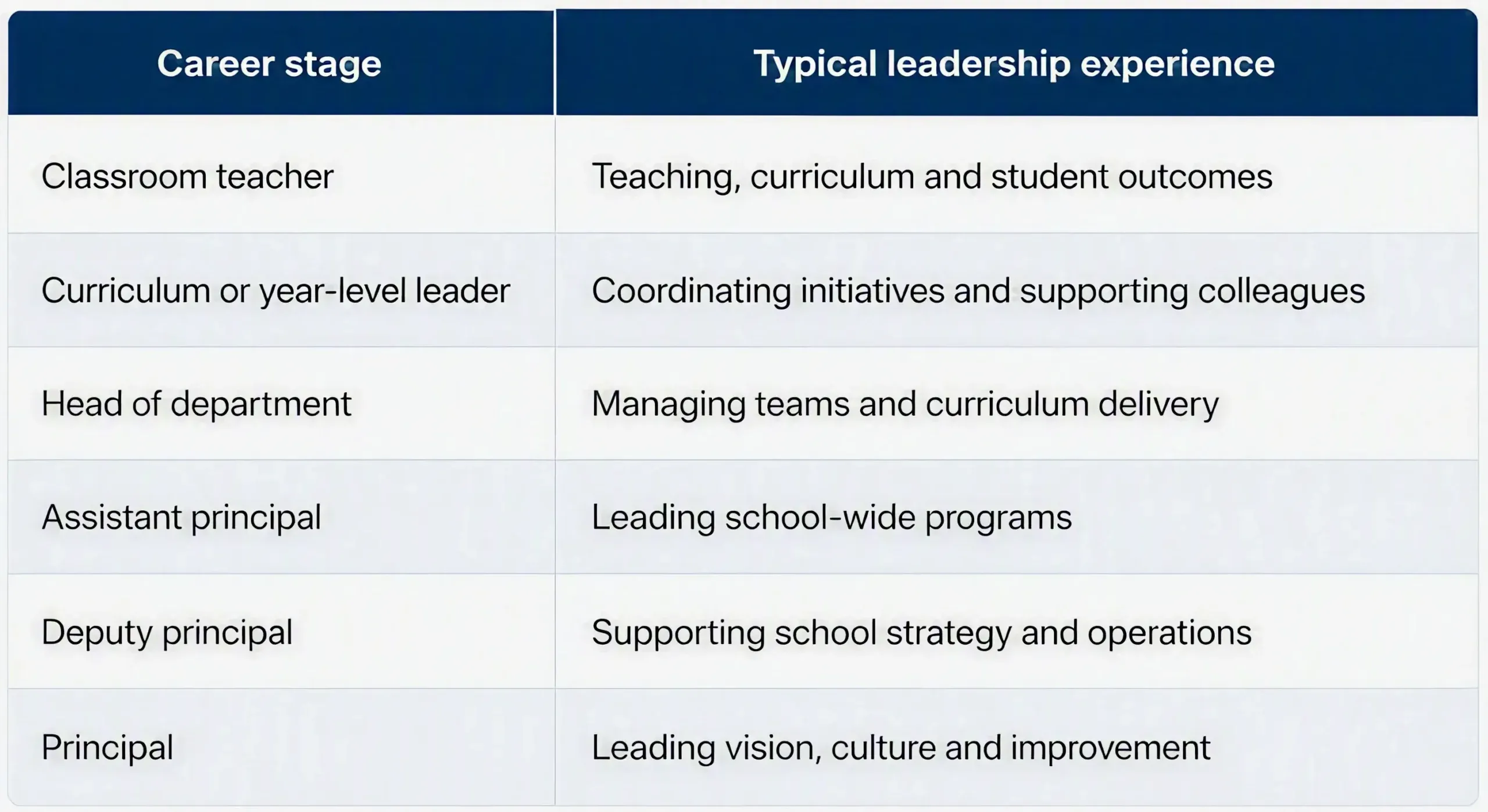
Figure 1: Pathway to leadership
It is important to remember that career pathways are rarely linear. Some educators move through formal leadership positions, while others build influence and experience through projects, curriculum initiatives, mentoring programs, and community engagement.
Ultimately, becoming a principal is about building your leadership capability, strengthening your professional judgement, and understanding how schools operate beyond the classroom.
What leadership experience do aspiring principals develop?
Successful principals draw on a broad range of capabilities developed throughout their careers. Some key skills that will help you on your journey to school leadership include:
Educational leadership
Strong principals maintain a clear focus on teaching and learning. They understand curriculum, assessment, pedagogy and student wellbeing, using this knowledge to drive improvement across an entire school.
Instructional leadership
Instructional leadership involves supporting high-quality teaching practice, improving learning outcomes and helping educators develop professionally. This often includes coaching teachers, leading professional learning and supporting evidence-informed decision-making.
Strategic leadership
School leaders need to look beyond immediate challenges and consider long-term priorities. This includes aligning resources, staff development and school improvement initiatives with broader educational goals.
People leadership
Principals work closely with students, staff, families, governing bodies and education authorities. Their success often depends on the ability to communicate effectively, build trust and bring people together around a shared vision.
Leading change
Schools operate in an environment shaped by evolving policies, technologies, workforce challenges and community expectations. Principals need the confidence to lead change while maintaining stability, clarity and continuity.
Sound decision-making
School leadership often involves navigating complex situations where there may be no perfect solution. Principals balance student needs, staff wellbeing, operational requirements and compliance obligations while making decisions that support long-term success.
What qualifications do you need to become a principal in Australia?
There is no single qualification that guarantees a principal position.
Most principals have extensive teaching experience, demonstrated leadership skills, and a strong understanding of how schools operate and improve.
The Australian Institute for Teaching and School Leadership (AITSL) provides a nationally recognised framework in the form of the Australian Professional Standard for Principals. This standard outlines the professional practices and leadership requirements expected of school leaders across Australia.
In addition to teaching qualifications and registration, aspiring principals often develop their expertise through leadership opportunities, mentoring, strategic projects, and ongoing professional learning.
How long does it take to become a principal?
There is no standard timeframe for becoming a principal in Australia. Each pathway is different and depends on your experience, qualifications and the opportunities available to you.
Some educators may transition into leadership positions relatively quickly, while others spend years growing their expertise through teaching, curriculum leadership, assistant principal or deputy principal roles.
Do you need a master’s degree to become a principal?
A master’s degree is not always required to become a principal in Australia. However, many aspiring school leaders undertake postgraduate study to strengthen their leadership capability, deepen their understanding of educational leadership, and prepare for senior leadership responsibilities.
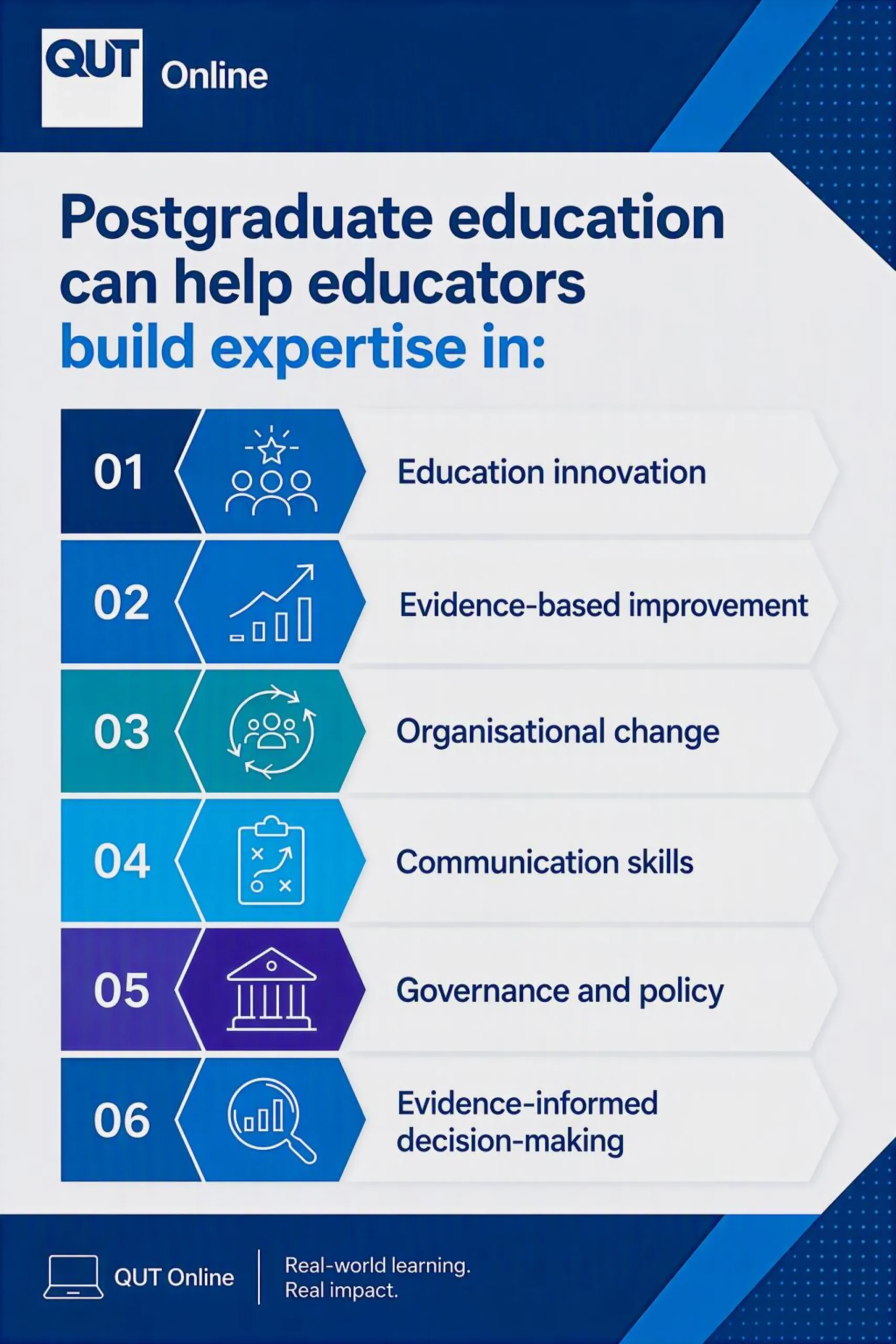
Figure 2: How postgraduate education can build expertise
A postgraduate qualification can serve as a catalyst for professional growth, helping educators build the expertise and perspective needed for senior leadership roles.
If you are interested in pursuing postgraduate education but can’t take time away from the classroom, QUT Online’s postgraduate courses in education may be the answer to achieving your career goals. All our courses are taught 100% online and allow you the flexibility to study on your schedule.
What are the requirements for school leadership in Australia?
Requirements vary across Australian states and territories.
Educators are generally expected to maintain teacher registration and meet the requirements of their relevant regulatory authority. Depending on where you work, this may include regulatory bodies such as:
- Queensland College of Teachers (QCT)
- NSW Education Standards Authority (NESA)
- Victorian Institute of Teaching (VIT)
- Teacher Registration Board of Western Australia (TRBWA)
Individual school systems and employers may also have their own leadership development, recruitment and selection requirements.
Is principalship the right next step for you?
Not every experienced teacher wants to become a principal, and that’s perfectly understandable.
Principalship comes with increased responsibility, visibility and accountability. While many educators find the role fulfilling, it represents a significant shift from classroom teaching.
If you are still unsure about whether school leadership is for you, consider these questions:
- Do I enjoy helping other educators develop their practice?
- Am I interested in shaping school culture and direction?
- Can I lead through uncertainty and change?
- Do I want to influence learning outcomes across an entire school?
- Am I prepared for the operational responsibilities that come with leadership?
Your answers can help you better understand whether principalship aligns with your professional aspirations.
Building a career with broader influence
Becoming a principal represents a significant step in an educator’s leadership journey, bringing opportunities to shape teaching, learning and school improvement at a broader level. Through leadership experience, professional learning and postgraduate study, educators can build the knowledge and confidence needed to lead a school community.
For many educators, the journey begins with a desire to contribute beyond their own classroom. Over time, leadership opportunities, mentoring experiences, professional learning and postgraduate study can help build the capabilities needed to take that next step.
Principalship is more than a promotion. It is an opportunity to shape teaching, learning and culture at a school-wide level.
For educators who want to make a broader impact on student outcomes, becoming a principal can be a rewarding career progression and a meaningful way to contribute to the future of Australian education.