Webinar insights: Graduate Certificate in Emergency and Disaster Management
Transcript
Graduate Certificate in Emergency and Disaster Management
Access now
Frequently asked questions
No. Experience in emergency or disaster management may help, but it is not required. Students can come from a range of professional backgrounds and build their knowledge through the course. Please refer to the entry requirements to check your eligibility.
You will learn about disaster risk, preparedness, response and recovery, with a focus on systems thinking and practical leadership. The course also covers areas such as governance, policy frameworks, risk management, communication, collaboration and critical thinking.
No. The course may suit people in frontline roles, as well as those working behind the scenes in planning, policy, logistics, health, communications, recovery, local government, community services and related areas.
Introduction
Maggie Hill: Hello everyone. My name is Maggie Hill and I’ll be hosting this evening’s webinar focused on QUT Online’s Graduate Certificate in Emergency and Disaster Management. This webinar is designed to provide an overview of the course from both an academic and practical perspective.
Before we begin, this session is being recorded and will be made available on the QUT Online website later.
I’d like to begin by acknowledging the Traditional Owners of the lands on which we meet today, as well as the Turrbal and Yuggera, the First Nations Owners of the lands where QUT now stands. I pay my respects to Elders past and present and acknowledge the important role Aboriginal and Torres Strait Islander peoples continue to play in the knowledge, leadership and care of communities.
Webinar overview
Maggie Hill: Today’s webinar is designed to help you decide whether the Graduate Certificate in Emergency and Disaster Management is the right fit for your goals. During the webinar, you’ll learn more about the academic content and learning outcomes, as well as the practicalities of studying this course online.
Dr Sam Toloo will provide a snapshot of the course and the kinds of careers and roles it supports. We’ll have a conversation with him about course content, learning outcomes, and the skills that matter in emergencies and recovery.
We’ll then be joined by one of the course Online Learning Advisors, Sergeant Patrick Hayes, who will talk about the practical experience of studying online and what you can expect from a day-to-day perspective. Sergeant Hayes will also share how his direct experience working in emergencies has helped in his role supporting students in this course.
I want everyone to finish tonight’s session with their questions answered. We’ll have an opportunity for a Q&A session, and you can add your questions to the Q&A function now. We’ll get to them at the end of the webinar.
Introducing Dr Sam Toloo
Maggie Hill: It’s now time to welcome our first speaker, Dr Sam Toloo. Dr Toloo is a health sociologist in QUT’s Faculty of Health. His work focuses on community and consumer perspectives across health services, disasters and climate change. His research has informed health and disaster risk reduction policy in Australia and globally. Sam coordinates postgraduate courses in health systems, health policy and emergency management. Dr Toloo, thanks for being here. We’re looking forward to hearing more from you about the Graduate Certificate in Emergency and Disaster Management.
Emergency and disaster management in Australia
Maggie Hill: Let’s start by talking about what we’re seeing in Australia when it comes to emergency and disaster management. We know that emergencies are becoming more frequent and complex. What pressure does this place on health systems and communities immediately and over the longer term?
Dr Sam Toloo: Good evening, everyone, and thank you Maggie for the introduction and for this opportunity. Let me start by saying that disasters are called disasters because they impact our lives and livelihoods.
A tornado in the middle of nowhere is a natural hazard or phenomenon. When it affects communities, uproots houses and livelihoods, and injures or kills people, it becomes a disaster. We are seeing more severe disasters, sometimes multiple hazards at the same time, along with their ripple and cascading effects. That becomes a problem for our systems, not just the health system but other systems as well.
In the short term, we see deaths, injuries, potentially infectious diseases, mental distress and psychological distress. Long-term impacts can be considerable. We did research on the long-term impacts of the 2011 flood, and even after seven years many people were still dealing with psychological, insurance and financial impacts from the disaster.
In the long term, we can see disabilities, mental health issues, chronic diseases that have gone through gaps in management, and negative impacts on budgets, finance, the economy and development projects because money needs to go somewhere else. We can also see increasing inequity and vulnerabilities in the community, as well as impacts on social cohesion.
A clear example is COVID-19, which is in living memory for almost everyone. It affected almost every corner of the globe and every part of our systems and societies, from the economy and environment to social and behavioural aspects, supply chains, education, healthcare delivery and health systems. What we are trying to achieve is systems thinking: looking at disasters from a holistic perspective. That is the basic focus of our course.
Roles across the emergency and health ecosystem
Maggie Hill: Fantastic. Thank you. What roles in the health and emergency ecosystem are critical in responding to this increasing frequency? I’m keen to hear about roles people might not think of, including some of those behind-the-scenes roles.
Dr Sam Toloo: That’s a good question. Usually, what we see on the ground are volunteers, SES people, police and firefighters. We also see people in the health system, including emergency departments, ambulance, mental health professionals, clinicians and social workers. But that is just the facade. Behind the scenes, many people work across the whole continuum of disaster planning, preparedness, response and recovery.
What we see is often the response phase, when something happens and people are out there immediately. But beforehand, a lot of work goes into preparing communities and planning how to respond. Without that, we would not be able to coordinate among the agencies and organisations that need to be involved. After the immediate phase, long-term recovery starts.
There are people working in offices and on the ground outside the immediate acute phase. Emergency and disaster management officers and teams sit in control centres, such as the one in Brisbane. At the national level, agencies work on policies, frameworks, legislation and coordination across states. Local government councils also work in this area, especially through community education, preparedness activities, events and workshops.
We also have public health officers and epidemiologists working behind the scenes when needed, along with people in logistics, supply chain, procurement, IT and digital infrastructure. In the current environment, cybersecurity is also part of the disaster context. Communications and community liaison officers are important, particularly when it comes to warnings and disaster messages. Disaster recovery officers work on long-term projects to rebuild physical infrastructure and resilience within communities, schools and families.
Skills needed in emergency and disaster management
Maggie Hill: Fantastic. Can you talk to us about the skills these professionals need to be effective both in an emergency and after an event?
Dr Sam Toloo: We have two sets of people, skills and expertise. At the specialist level, there are people whose roles deal directly with this work, such as clinicians, emergency staff, ambulance officers, paramedics, logistics specialists, IT specialists and engineers building dams and infrastructure. All of those specialists deal with disasters in one way or another.
There are also specific skills that everyone working in this environment needs to have to some degree. A lot of these are soft skills, but there is also knowledge that needs to be embedded as part of everyday work if you are working in this environment, or even if you occasionally step into these types of roles.
As a leader, you need strategic leadership and long-term vision. You need to see where things are and where they are going, rather than getting stuck in the middle of a disaster response. You need to see before, during and after, with a holistic perspective.
You also need knowledge of policies and legislation, as well as up-to-date knowledge of current approaches to disaster management. In the past, the traditional approach was mostly response-focused and top-down. Now, we also have community-based disaster management. You need to understand command and control systems, psychosocial and cultural factors, communications, and public relations methods.
You need to know how to work with people and communicate with them, especially in distressing situations. You need care and passion in this environment because you work with people and serve people. Working in this environment can be extremely rewarding and extremely stressful, so if you are not passionate, you will not last long.
To be an effective manager or leader in the long term, you need to work under stress, be part of a team, make rapid decisions and manage stress. There is also a great degree of support in these environments. I see many people step into this kind of work and never leave.
How the graduate certificate develops these skills
Maggie Hill: Strategic leadership, long-term vision, decision-making and stress management are all important. How does the Graduate Certificate in Emergency and Disaster Management help students develop these skills and more, so they can be effective and lead during these events?
Dr Sam Toloo: Before we started this course, we did research to find out more about what core skills, knowledge and competencies would help disaster managers. We developed generic emergency and disaster management standards, which have been published.
We found that we needed to focus on three domains: knowledge, skills and application. Under knowledge, there are topics such as governance and policy frameworks, theoretical and conceptual foundations, and contemporary disaster management principles, processes and approaches. In the skills domain, we consider leadership, communication and collaboration. In application, the main areas are professional practice and critical thinking.
We designed the course around these domains and principles. The course has four units. It starts with foundational knowledge, including risk assessment, risk management, risk strategies, basic principles, concepts and available frameworks. In the following units, we cover planning and preparedness, response and recovery, and then leadership characteristics and skills, including communication and coordination.
Across the course, we do role playing, exercises and case studies. Students use general knowledge and references, and they also complete authentic assignments where they play the role of someone in a leadership position, such as a police commissioner, chief health officer or mayor, who needs to face the media and provide information about an unfolding disaster.
These are some of the ways we bring in those elements and make the course different from others. It is not just hypothetical content to read; students also practise it. Even though it is online, we still include collaboration, interaction and live work with participants.
Introducing Sergeant Patrick Hayes
Maggie Hill: Thank you so much for joining us and sharing these insights. We look forward to hearing more from you during the Q&A segment.
I’d now like to welcome our second speaker, Sergeant Patrick Hayes. Patrick is an Online Learning Advisor who supports students through their study journey. He also brings frontline experience as a police officer, which gives him a practical view of what emergency management looks like in real settings. Welcome, Patrick.
Sergeant Patrick Hayes: Thanks, Maggie. It’s great to be here, and welcome everyone to the webinar.
The Online Learning Advisor role
Maggie Hill: To start, can you tell us about your role as an Online Learning Advisor? What do you do in this role, and how do you interact with students on a day-to-day basis?
Sergeant Patrick Hayes: As an Online Learning Advisor and unit coordinator, I primarily act as the tutor, subject matter expert and academic guide for students as they navigate the online course. My role is to bring the theory components of the course to life for students through assignments, discussion boards and fostering a vibrant online community.
Many students come into the course from professional backgrounds, including policing, firefighting, health and defence. I like to encourage students from the beginning of the unit and give them some ownership. I act as a guide, while students have control of the unit and their online experience.
Connecting professional experience with course theory
Maggie Hill: How has your professional experience in policing shaped the way you support students in this course?
Sergeant Patrick Hayes: Many students come from professional roles in law enforcement, health, fire services and defence. I’ve entered my 26th year of operational frontline policing, and that has given me the opportunity to reflect on the gaps between academic theory and practical experience.
By drawing on operational experience, I can help students bridge the gap between academia and real-life experience. In the course, we aim to prepare students for real-world scenarios rather than only learning from academic materials and textbooks.
Balancing online study with work and other commitments
Maggie Hill: Given the background of many of these students, they might be in demanding roles. How do you see them juggling these roles while completing the course?
Sergeant Patrick Hayes: Online study can be a juggling act. I emphasise to students that online study is challenging, particularly when they have professional careers. Many students work shift-based roles in policing, health, fire services or defence, and many are also juggling family commitments while completing the course. It becomes a balancing act, so we promote robust task management and time management.
Connection and support in the online learning environment
Maggie Hill: How do students connect with each other when they’re studying online, and what’s your role in encouraging people who might be hesitant or new to online study?
Sergeant Patrick Hayes: We foster connection to enrich the online experience. In QUT units, we have Collaborate Live sessions, similar to this webinar. Students come into a live Collaborate room where I host the session, discuss assignments, and answer questions or queries students might have. We do these sessions for each assignment.
From my perspective, it is important that students who have been away from online study for several years, or who are new to online study, feel supported. For each assignment, the live session allows us to discuss requirements and expectations. Because many students work shifts, we record those sessions so they can listen in their own time.
Another strategy is the discussion board. Students get access to discussion boards, which provide opportunities to discuss contemporary topics and build networks. The discussion boards are popular, and in feedback we have received, students have said they have taken the professional networks developed in the course into their professional roles.
For example, students working in health who have been involved in disasters or critical incidents have found that the professional relationships developed through discussion boards with other students have been beneficial.
Applying course concepts in the workplace
Maggie Hill: Can you share an example of how a student might apply the concepts they are learning in the course directly in their workplace?
Sergeant Patrick Hayes: Students in emergency management roles can use this course to enhance their ability in crisis leadership. For example, when leading a team in a crisis, emergency or critical incident, students can apply concepts from the Leadership in Disaster Management unit, where we look at a wide variety of leadership styles and models.
In a crisis context, a student might apply an adaptive leadership style or model, shifting from routine day-to-day management into rapid risk assessment, open communication and problem-solving to manage a team effectively in a crisis.
In the adaptive leadership model, we focus on emotional intelligence, organisational justice, and constant learning and development. Emotional intelligence involves acknowledging the human elements around vulnerable communities or communities that have suffered loss in a critical incident or disaster. That includes fear, the unknown, loss and resistance.
We teach students to apply leadership strategies and models that encompass deep empathy for those communities. Organisational justice means creating an environment where everyone is heard and valued, ensuring everyone participates in the recovery or problem-solving solution. Constant development means promoting a culture of continuous learning and a willingness to step outside comfort zones.
Feedback from students who have completed the Leadership in Disaster Management unit has been positive. Some have been involved in critical incidents or significant disaster responses within months of finishing the unit. They have been able to recognise their own emotional intelligence and that of their teams, and apply effective leadership styles and strategies.
Q&A: Experience, study habits and career pathways
Maggie Hill: Thank you, Sergeant Hayes. We’re going to move now to the Q&A portion of tonight’s webinar. This is an opportunity to ask Dr Toloo and Sergeant Hayes questions about the course.
The first question is for Dr Toloo. Do you need to have experience working in emergencies or disaster management to study the graduate certificate?
Dr Sam Toloo: It definitely helps, but it is not necessary. Over the years, I’ve noticed that people with experience in areas such as risk assessment, communications, business continuity planning and working across multiple agencies grasp these concepts more quickly because they have already been applying them.
As I mentioned, there are many roles in this environment. It is not just one disaster management role or one disaster manager. It does not matter where you come from or what your background is; you can use some of that experience and build on it by learning new knowledge and skills.
There can also be disadvantages. Some people with entrenched habits, especially those who have been away from university for a long time, bring those habits with them, and it can be difficult to change and learn new things. If you already know some concepts and are ready to update and upskill yourself, this is a good opportunity.
Maggie Hill: The next question is for Sergeant Hayes. Can you tell us what habits make for successful students in this course?
Sergeant Patrick Hayes: Interaction and participation are important. One of the strengths of this course is that students come from diverse professional backgrounds, including fire, ambulance and defence. They bring significant life experience, personal and professional experience, and diverse skills.
For example, students from a defence background bring a unique set of leadership skills compared with more traditional roles in health, police and fire services. Successful students interact, participate and contribute their expertise, which benefits me as well as the other students and participants.
Maggie Hill: Is it possible to complete the course while working full-time?
Sergeant Patrick Hayes: Absolutely. It is a flexible course, and the teaching team is there to support students and help them succeed. There is nothing more satisfying than seeing students return to their professional roles and provide strong leadership in the emergency and disaster management space.
The course can be completed while working full-time. It requires commitment and flexibility, but we are more than willing to work with students across that.
Maggie Hill: One final question for Dr Toloo before we wrap up. What sort of professions do students go into once they have completed this course?
Dr Sam Toloo: As Patrick mentioned, many participants come from working backgrounds in this kind of environment. Many are here to upskill, go back to their work, or step into higher-level leadership roles where they are more engaged in the disaster management side of their work.
Over the years, we have had people from health backgrounds, including GPs and psychiatrists, as well as military and ex-military personnel, firefighters and police. Some people found themselves in situations where they needed to respond, such as evacuating a hospital because of bushfire. They realised they needed to upgrade their skills and knowledge to understand disaster preparedness and response.
There are many other roles for people who are new to this area or considering a change. In Australia, NGOs, charities, local councils, neighbourhood centres and social services are all involved in disaster management in some way. State departments of health, local health services and health networks are also involved, although available roles vary over time.
Internationally, we have had students who wanted to gain experience overseas. Some have worked with NGOs in disaster relief, care, Médecins Sans Frontières, Red Cross and Red Crescent, as well as local NGOs. There are also organisations such as the United Nations and WHO.
Volunteers and people working in lifesaving, such as surf lifesavers and lifeguards, are also involved in disaster management in one way or another. Understanding their roles and responsibilities, what they can do and what they cannot do, can be supported by participating in this course.
Q&A: Education and disaster preparedness
Maggie Hill: I might jump in with one last question that has come through. If someone has a strong background in education as a teacher, do you see roles for them in emergency preparedness, response and recovery?
Dr Sam Toloo: There is a strong body of research showing that a lot of disaster preparedness starts in schools. Teachers and students are part of the backbone and foundation of disaster preparedness for families. Children who learn what to do to prepare for a disaster can go home and encourage their families to become better prepared.
This has been shown internationally and in Australia. Schools play a very important role in disaster preparedness for families. During COVID, schools and education staff were involved in disaster response, especially in acute phases. Having teachers who understand the necessity of this work helps support people on the front line and keeps children in a safe environment.
Closing remarks and next steps
Maggie Hill: Fantastic. Thank you. That brings us to the end of our Q&A segment. A big thank you to Dr Toloo and Patrick for all your contributions this evening. They have been insightful and helpful for all attendees tonight.
If you’re considering the Graduate Certificate in Emergency and Disaster Management, the next step is to head to the course page and download the brochure. You’ll find it at qutonline.edu.au. Head to the courses section, where you’ll find this course in the health section. You can download a detailed course brochure, chat to the team on the webpage, or call between 9:00am and 5:00pm, Monday to Friday.
Thank you for joining. That brings the webinar to an end for this evening. We’ll send a follow-up email with the recording and key links, and we hope to see you online soon for the course. Thanks so much.
This transcript is based on a recorded webinar and has been lightly edited for readability, clarity and conciseness. We’ve removed filler words, false starts, and repeated phrases (such as “um” and “ah”) without changing the meaning. All information remains accurate to the recording.
Webinar insights
As emergencies and disasters become more frequent, we need leaders ready to build resilience and keep communities safe
Creating the workforce our communities need to respond to this growing challenge.

Want to take your emergency and disaster management skills to the next level? Career pathways you may not have considered
A practical guide to roles, skills and how postgraduate study can help you lead in complex events.
From technical expert to strategic leader: how does the QUT Online MBA accelerate your next professional step in rapidly evolving business world?
As the world of business becomes more complex and ambiguous, many leaders want to develop the skills to effectively manage these challenges. The online MBA at QUT Online offers a flexible study option delivered by a globally recognised business school.
The need for skilled professionals who can respond to domestic violence
Domestic violence is a growing issue across Australia, creating urgent demand for professionals with the skills to respond safely and effectively. This blog explores why specialist training matters and how the QUT Online Graduate Certificate in Domestic Violence Responses prepares you for real-world situations. Learn how you can build practical, evidence-based skills to support victims and make a meaningful impact.
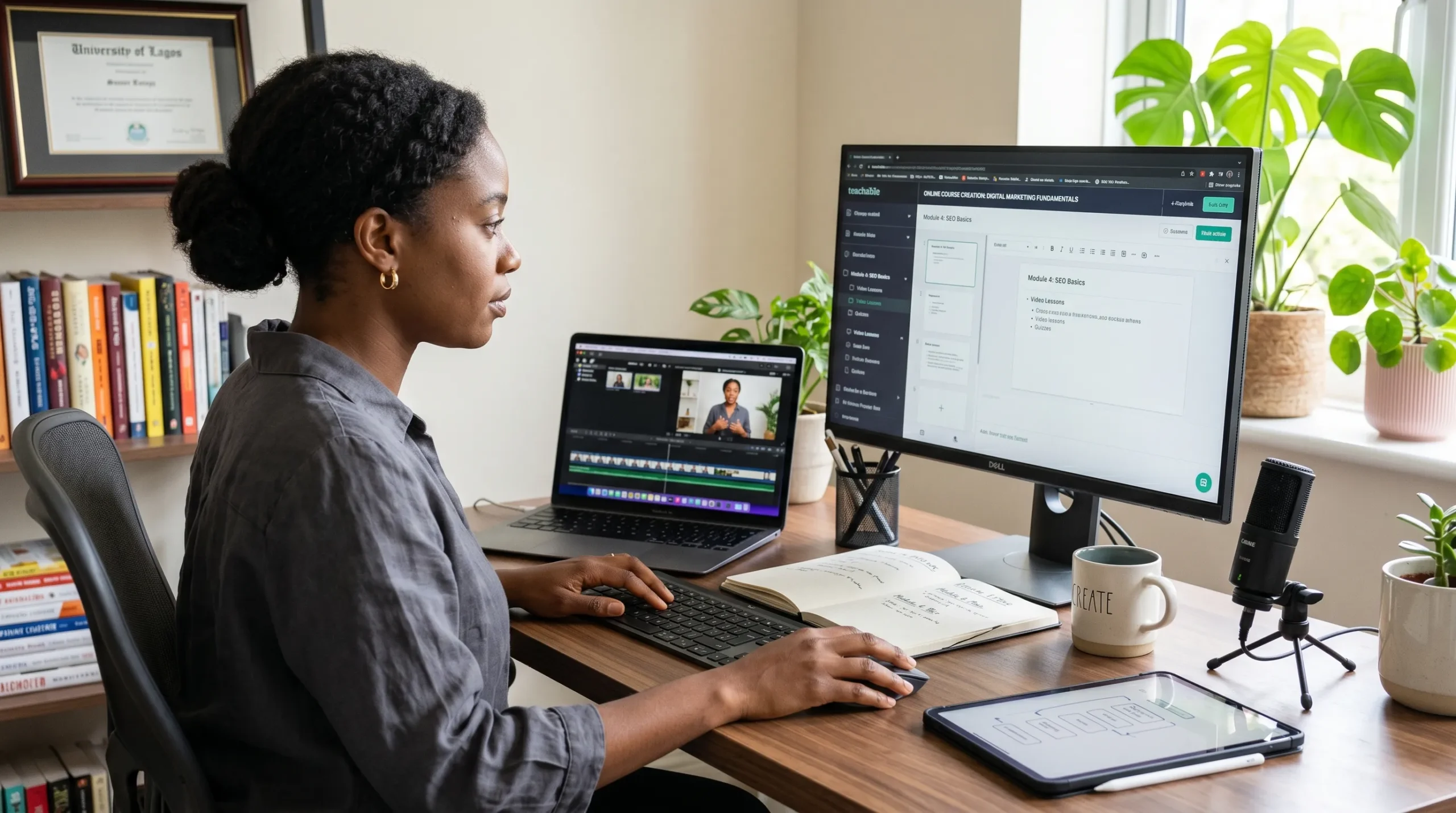
Is learning design a viable career path for teachers and educators?
As online learning expands, learning design has emerged as a growing career path for educators seeking a change. Discover how you can transition into a future-focused career shaping effective digital learning experiences.

Stepping into the growing career path of investigations and intelligence
It’s a career pathway that opens doors in many private companies and public sector organisations, but what does it take to get your foot in the door?

Thinking about a future in AI? Career pathways you may not have considered
A practical guide to roles and skills in demand across the IT landscape and how postgraduate study can help you lead in this rapidly evolving landscape.